Autism is a brain difference that is fundamental to who a person is. It affects the way a person develops in childhood, the way that they think, and the way they live their life. All Autistic people are unique, but some of the areas where Autistic people develop differently to non-Autistic people include:
- Communication
- Socialisation and interaction with others
- Thinking and processing
- Sensing and perceiving the environment
- Moving, playing and having fun
Autism is not a disease or an illness, and it cannot be treated or cured. Instead, autism is a different way of ‘being’ in the world, and can be a source of strength, diversity, and beauty.
Autism is a spectrum
Although autism is a spectrum, it is important to understand that this spectrum is not linear. Each Autistic person will have a different set of strengths and challenges. This means we don’t think about Autistic people as fitting somewhere on a spectrum from ‘more’ Autistic to ‘less’ Autistic, or from ‘higher functioning’ to ‘lower functioning’. Instead, an Autistic person’s needs and experiences can change from one day to the next, depending on the environment they are in and how well they are able to cope with day-to-day demands. Autistic people also develop new skills and encounter new challenges as they grow up, just like everyone else. Therefore, functioning labels do not capture the complexity and variability of an Autistic person’s experiences.
Autism is a developmental difference, so an Autistic person’s differences might change or become more or less obvious as they grow up. Autistic people also often have ‘spiky profiles’. This means that the difference between how strong someone’s strengths are and how much they struggle with their weaknesses is more pronounced than it would be in a non-Autistic person. Whilst research and professionals have historically focussed on the challenges Autistic people face, it is also important to recognise and foster Autistic people’s strengths.
No two Autistic people are the same. However, for someone to be diagnosed as Autistic, they must display:
- Differences in social communication and social interaction; and
- Restricted, repetitive patterns of behaviour, interests, or activities – this includes sensory differences.
Differences in social communication and social interaction
‘Differences in social communication and social interaction’ refers to the way an Autistic person behaves in social situations and how they use language and non-verbal communication. There are a lot of ways that these differences can manifest, but some common ones include:
- Being less likely to initiate and sustain interactions with other people
- Being less likely to respond when other people initiate interactions
- Feeling tired or anxious in social situations
- Difficulty with the back-and-forth of conversations Reduced eye contact in social situations
- Differences in the way a person shares their thoughts, feelings, interests etc. with other people
- Struggling to understand non-verbal communication like gestures, facial expressions and body language
- Difficulty with friendships and relationships
- Using body language, sign language or electronic devices that support communication, rather than spoken language (these methods of communication are collectively known as Augmentative and Alternative Communication, or AAC)
- Speaking less frequently or less fluently than non-Autistic people
- Having a flat or monotonous speaking voice
- Using more complex language than most non-Autistic people
- Needing extra time to process and respond to spoken language
Restricted, repetitive patterns of behaviour, interests or activities
‘Restricted, repetitive patterns of behaviour, interests or activities’ refers to the fact that many Autistic people behave in ways that may seem odd or idiosyncratic to observers. However, these behaviours often serve an important purpose for the Autistic person – they might calm anxiety or be a source of pleasure, for example. The following are examples of restrictive, repetitive patterns of behaviour, interests or activities:
- Repetitive movements and sounds, known as stims (for example, bouncing your knee, tapping a pen, flapping your hands, rocking back and forth, clicking your tongue, humming)
- Lining up/organising/categorising objects
- Sticking to a routine and following rules precisely
- Struggling with unpredictability and change
- Strong and intense interests (sometimes called special interests or spins)
Sensory differences
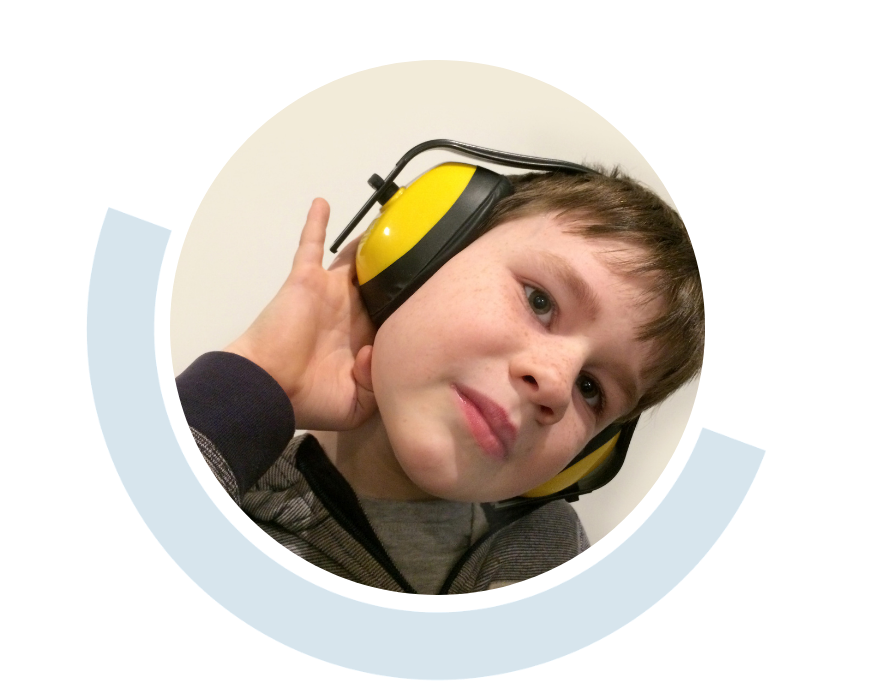
Autistic people often perceive and process the environment around them differently from non-Autistic people. Humans have eight sensory systems: vision, touch, taste, hearing, smell, proprioception (our sense of where our body is in space), interoception (our sense of our body’s internal states) and vestibular (our sense of balance). Autistic people can be hypersensitive (more sensitive) to some sensations and hyposensitive (less sensitive) to other sensations. Examples of sensory differences include:
- Finding bright fluorescent lights painful
- Being overwhelmed by the sound of many voices talking at once
- Disliking the texture of certain foods
- Finding it hard to tell when you are hungry
- Being clumsy
- Loving bright colours
- Enjoying really spicy foods
- Needing to move around a lot
Information from: https://www.altogetherautism.org.nz/what-is-autism/
Updated: 9/4/2026
Neurodiversity
Neurodiversity is the idea that everyone’s brain works differently and no one ‘type’ of brain is inherently better or worse than any other type of brain. Some people find it easier to behave in ways that society expects because of the way their brains work; these people are described as neurotypical.
People whose brains function differently are described as neurodivergent. Neurodivergent is a broad umbrella term which includes autism, Attention Deficit Hyperactivity Disorder (ADHD) and specific learning disabilities. It also includes mental health conditions, intellectual disability, and traumatic brain injury.
Takiwātanga
The Māori word for autism is takiwātanga. Tangata whaitakiwātanga means Autistic person. Takiwātanga derives from the saying ‘tōku/tōna anō takiwā’, meaning ‘in my/her/his/their own space and time.’
Takiwātanga is a part of human diversity and focuses on the strengths of tāngata whaitakiwātanga, placing them in the context of their whānau. Takiwātanga acknowledges that individuals are unique; they move at their own frequency and pace and may have alternative routes to achieving tasks.
The kupu takiwātanga was crafted by rangatira and te reo expert Keri Opai. Keri created Te Reo Hāpai – The Language of Enrichment, a te reo Māori glossary for use in the mental health, addiction, and disability sectors. It was created to provide a glossary of positive terms through a te ao Māori lens. Takiwātanga is underpinned by te ao Māori understandings of diversity and celebrates and encompasses traditional approaches to health and disability.
Te ao Māori perspective
A te ao Māori perspective and approach to takiwātanga can be found in things like:
- Te reo Māori
- Tikanga Māori
- Māori hauora models
- Traditional practices such as karakia, rongoā māori and maramataka.
This is the body of knowledge that has been passed down through many generations and captures the wisdom of our tūpuna to provide guidance for whānau on how they can lead positive lives through a te ao Māori worldview. It is important to note that different iwi and hapū may have different tikanga or kupu around autism and neurodiversity.
You can find more information about takiwātanga from a te ao Māori perspective here. We also have a free online course offering a kaupapa Māori space for whānau to explore the meaning of takiwātanga. Kanorau are an excellent organisation to get in touch with if you want to learn more about takiwātanga from a te ao Māori perspective. You can watch their videos on YouTube.
“Shining in Our Own Way – Helping kids see, understand, and celebrate friends on the autism spectrum.” – a big thank you to author Laavanya Dinesh, who has kindly shared a free PDF version of her autism awareness booklet with our community.
By Autistics, For Autistics – Online Hui: Altogether Autism hosts relaxed Zoom meet-ups for Autistic people or those who think they might be — no diagnosis needed. Meeting details below. Click here for a copy of the flyer.
- Ages 18–25: Fortnightly Fridays, 8–9pm
- Ages 26+: Weekly Fridays, 1–2pm / Fortnightly Saturdays, 8–9pm
Further information
The Aotearoa New Zealand Autism Guideline: He Waka Huia Takiwātanga Rau provides evidence-based recommendations on how to support Autistic people throughout their lives. It covers assessment and diagnosis, support for individuals and families, education, mental health and wellbeing, living in the community, professional development, Māori perspectives and perspectives of Pacific Peoples.