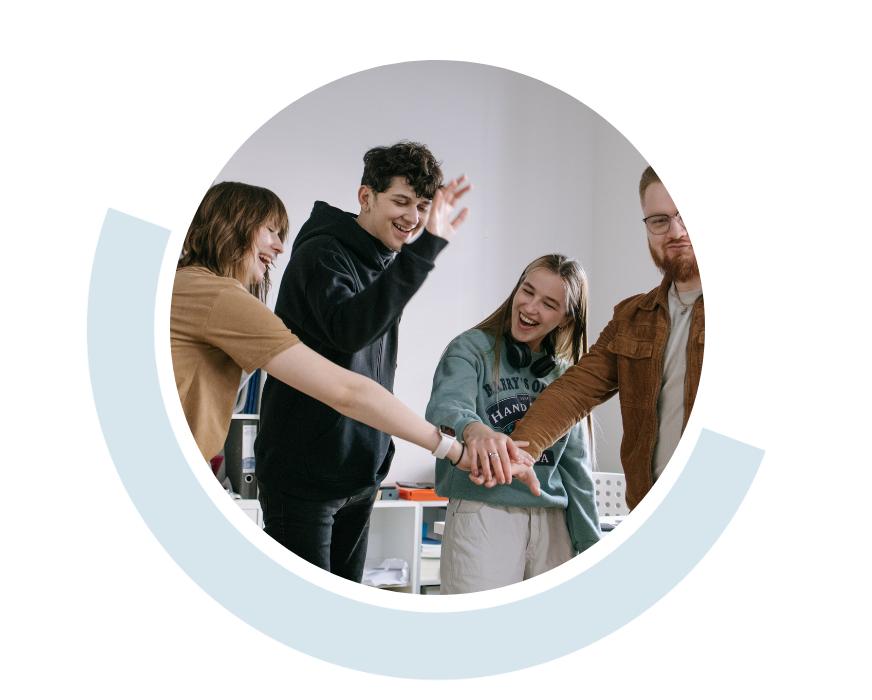
Website header graphic with a pale background and curved light blue accents, featuring a circular photo of four people smiling and stacking their hands together in the centre during a supportive group activity.

Finding the Right Group

Support groups are available both in person and online throughout New Zealand. Some are open to all disabled people and families, while others are specific to disabilities, cultures, languages, age groups, or life stages.

There are a wide range of support groups available across Auckland that provide opportunities for disabled people, parents, whānau, carers, and siblings to connect with others, share experiences, learn new skills, and reduce isolation.

Why Support Groups Matter

Support groups provide more than information. They create connection, reduce isolation, build confidence, and help disabled people and families feel understood. Whether someone is newly diagnosed or has been navigating disability for many years, support groups offer a valuable opportunity to learn, share, and belong.

For Families and Parents

Many support groups are designed specifically for parents and caregivers of disabled children and adults. These groups offer a safe and welcoming environment where families can:

  • Share experiences and practical advice
  • Learn about disability supports and services
  • Hear from guest speakers and professionals
  • Build friendships and support networks
  • Gain emotional support from others on a similar journey

Disability Connect currently facilitates several family-focused support groups, including:

  • Chinese Families Disability Support Group
  • Culturally Diverse Parents Disability Support & Social Group
  • Weekly Zoom Support Group (Mondays at 7pm, open to all families
These groups cover topics such as autism support, behaviour support, communication, financial planning, healthy relationships, parenting, and wellbeing.
Some support groups are based around a specific disability too. A list of Auckland and online support groups can be found at the bottom of this page.

For Disabled People

Peer support groups allow disabled people to meet others with shared experiences, develop confidence, build friendships, and learn from one another. Peer groups may focus on a specific disability, age group, culture, or shared interest.

Examples include:

  • Autism peer groups
  • Down syndrome support groups
  • Cerebral palsy networks
  • Brain injury support groups
  • Deaf and hearing loss groups
  • Disabled youth social groups
  • Visable Peer Support Groups
  • Disabled Men’s Mental Health Groups

Peer support is often described as “disabled people supporting disabled people” and can help increase belonging, self-determination, and community participation.


For Siblings

Brothers and sisters of disabled people face unique experiences and challenges. Dedicated sibling support programmes help them connect with others who understand what life is like growing up with a disabled sibling.

Parent to Parent’s SibSupport NZ programme provides:

  • SibShops (ages 8–18) – fun activity days combined with discussion and peer support
  • SibCamps (ages 8–18) – weekend camps focused on connection, confidence, and friendship
  • SibVoyage – a specialised programme for Northland youth

These programmes help siblings develop coping strategies, build resilience, make friends, and recognise that they are not alone


ASG logo with the letters “PASG” in colourful patterned blocks above smaller text reading “PASIFIKA AUTISM SUPPORT GROUP” on a white background.

Pasifika Autism Support Group

Pasifika Autism Support Group supports Pasifika families and raises awareness and acceptance of autism in Pasifika communities. It provides information, group meetings, and community connection.

View Website Send Email
Facebook Instagram
St Columba logo, featuring a light blue cross symbol beside a grey vertical line and the organisation’s name in dark grey, with the tagline “Where life and faith meet” underneath, on a white background.

St Columba Special Kids Playgroup & Family Support Group

St Columba Church in Botany hosts a long-running Special Kids Playgroup and Family Support Group for families and caregivers of children with autism and related needs. It provides a welcoming, low-cost play and support environment in East Auckland.

View Website 09 274 4864 Send Email
Facebook
Te Ara Tāne logo, featuring a black silhouette of a man on a patterned pathway that curls into a large koru, with a feather-like motif above and the words “The Path of Men” underneath, on a white background.

Te Ara Tāne – The Path of Men

Te Ara Tāne is a programme creating space for disabled men aged 18 to 30 to connect, talk openly, and explore issues such as identity, relationships, mental health, and everyday challenges. It is a peer-support space centred on honest kōrero and belonging.

View Website 09 414 5360 Send Email
Facebook
The Angelman Network logo, featuring a pale green map of New Zealand crossed by a curved blue double-helix design, with the name and “Te Hononga Angelman” on a turquoise-to-yellow gradient background.

The Angelman Network

The Angelman Network is New Zealand’s support organisation for Angelman syndrome. It provides information, advocacy, awareness, and connection for people and whānau affected by Angelman syndrome in Aotearoa. The network connects families with support, resources, gatherings, newsletters, and online communities, including support for newly diagnosed families.

View Website Send Email
Facebook
We Are Brave Together logo, featuring the words “We Are Brave” in black and “together” in teal script, with a small teal heart underneath, enclosed by a grey braided circular border on a white background.

We are brave together

We Are Brave Together is a US based support community for mothers of children with disabilities, neurodivergence, medical complexity, and other unique needs. It runs Zoom groups and community connection for caregiving mums

View Website Send Email
Facebook Instagram
  • 1
  • 2